
Great British Insulation Scheme 2026: Did You Miss It? Here Is What to Do Now
Great British Insulation Scheme 2026 closed in March. Here's what replaced it, who qualifies for free insulation now, and how to apply today.

WalletWiseEU
· 7 min read
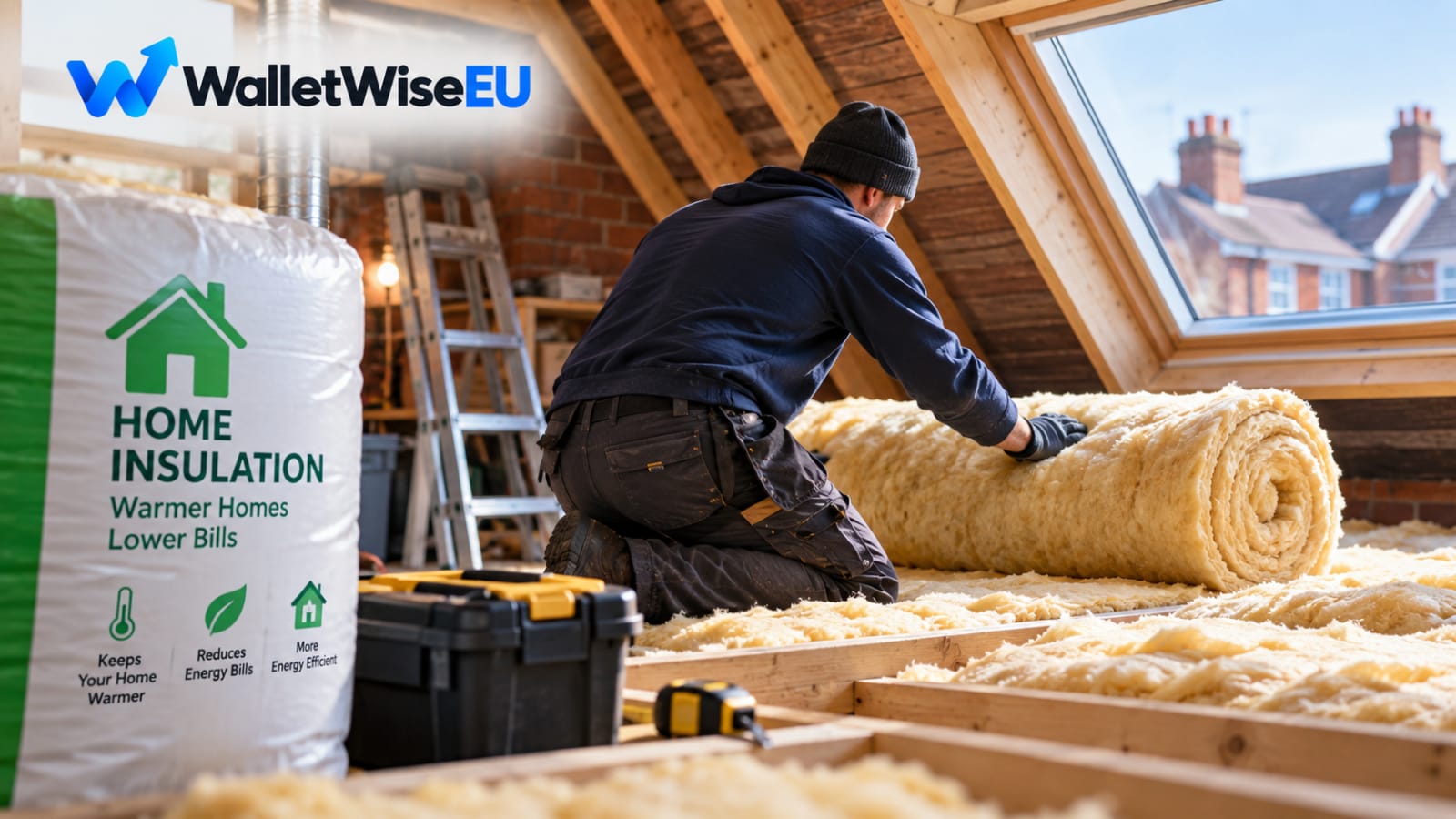
The great british insulation scheme 2026 closed to new applications on 31 January 2026 and fully wound down on 31 March 2026. If you've been searching for it hoping to apply, that window has gone. But that doesn't mean you're out of options.
There are still active government-backed routes to free or heavily subsidised insulation in 2026, and some of them are actually more generous than GBIS was. This guide explains what happened to the Great British Insulation Scheme, what replaced it, and exactly how to access what's still available right now.
What Was the Great British Insulation Scheme 2026?
GBIS launched in 2023 as a follow-on to the ECO4 scheme. Its goal was straightforward: help lower-income households and properties with poor energy ratings get insulation installed at no cost or heavily reduced cost.
The scheme covered loft insulation, cavity wall insulation, solid wall insulation, and a few other measures depending on your property type. Funding came from energy suppliers, who were required by Ofgem to hit installation targets across their customer base.
At its peak, the Great British Insulation Scheme 2026 was processing tens of thousands of applications. But the funding pot was always finite, and by early 2026 it had largely been spent. Applications closed 31 January 2026, with final installations completed by end of March.
So that's the background. Now let's talk about what you can actually do today.
ECO4 Scheme 2026: The Main Replacement for GBIS
The Energy Company Obligation scheme, now in its fourth iteration (ECO4), is the biggest active replacement for the Great British Insulation Scheme 2026 and in some ways a better one.
ECO4 is still accepting new referrals in certain areas, though supply is tightening. The core premise is the same as GBIS: energy suppliers fund insulation and heating upgrades for low-income and vulnerable households.
Who qualifies for ECO4?
You need to meet at least one of these conditions:
You receive means-tested benefits (Universal Credit, Pension Credit, Housing Benefit, Income Support, income-based JSA or ESA, or Child Tax Credit with an income under £31,000)
Your household income is under £31,000 and your home has an EPC rating of D, E, F or G
You're in a priority group defined by your local council (some councils have discretionary referral routes for households just above the income threshold)
What does ECO4 cover?
Loft insulation (or top-up to 270mm)
Cavity wall insulation
Solid wall insulation (internal or external)
Underfloor insulation
Air source heat pumps (in some cases)
First-time central heating systems
How to apply for ECO4:
Check the Simple Energy Advice website (gov.uk/simple-energy-advice). This is the government's official tool and it will tell you what schemes you may be eligible for based on your postcode and household details.
Contact your energy supplier directly. British Gas, E.ON, OVO, Octopus, and EDF all have ECO4 teams. Ask specifically for their ECO4 or Home Energy team, not general customer service.
Use a TrustMark-approved installer. Any ECO4 measure must be installed by a TrustMark-registered business. Avoid any company that contacts you out of the blue claiming to offer free insulation, as these are often commission brokers adding unnecessary cost to the chain.
Read our guide on How to reduce energy bills UK this winter 2026
Free Loft Insulation UK 2026: What's Still Available
Loft insulation is one of the most cost-effective home upgrades you can make. If your loft has less than 270mm of insulation, you're losing a significant amount of heat through the roof every winter.
Under ECO4, loft insulation remains one of the most commonly funded measures. If you meet the income or benefit criteria, there's a realistic chance this can be done at no cost through an ECO4 referral.
If you don't meet ECO4 criteria, the cost of loft insulation has actually come down in recent years. A standard loft insulation top-up for a three-bedroom semi costs around £300 to £400 through a TrustMark installer. The typical annual saving is £150 to £200, so payback within two years is realistic.
A few councils also run their own insulation grant schemes funded through the UK Shared Prosperity Fund. These vary by area and tend to be announced quietly, so it's worth checking your local council's website under "energy efficiency grants" or calling their housing team directly.
Great British Insulation Scheme Replacement: What Comes After
The Government has not yet confirmed what follows ECO4 in detail, but there are clear signals.
The Warm Homes Plan, announced in 2024 and part of the Labour government's clean energy agenda, is intended to be a large-scale retrofit programme that covers insulation, heat pumps, and solar. It's expected to be phased in from 2025 onwards with an initial focus on social housing and then private rented and owner-occupied properties.
At time of writing, Warm Homes Plan funding is beginning to flow through local authorities and combined mayors (Greater Manchester and the West Midlands are among the early movers). If you're in one of these areas, checking with your local council is worth doing now.
The Boiler Upgrade Scheme is also still running. This doesn't cover insulation directly, but if you're planning a full retrofit and want to pair insulation with a heat pump, the BUS grant covers up to £7,500 towards an air source heat pump installation.
[INTERNAL LINK: Ofgem energy price cap explained what it is and how it works]
EPC Rating and Why It Matters for Getting Grants
Almost every current insulation grant scheme links eligibility to your property's EPC (Energy Performance Certificate) rating. Properties rated D, E, F, or G are prioritised because they're losing the most energy and stand to benefit most from insulation.
If you don't know your EPC rating, you can check it free at the gov.uk EPC register in about 30 seconds. Enter your postcode and your property will almost certainly be listed if it was built after 1995 or has been sold or let in the past 20 years.
If your property isn't listed or the certificate is out of date (they're valid for ten years), you can commission a new one through a Domestic Energy Assessor. Cost is typically £60 to £120 and well worth it if you're applying for any grant scheme, since some require a valid certificate dated within the past two years.
An improved EPC rating also has a direct effect on your mortgage rate if you're remortgaging. Some lenders now offer green mortgage products at lower rates for properties rated C or above, so the case for improving your rating goes beyond grant eligibility.
What to Do If You Don't Qualify for a Free Grant
If your income or property type puts you outside ECO4 eligibility, you're not stuck paying full price.
The Green Finance route. Some banks and building societies now offer green improvement loans at below-standard rates specifically for insulation, solar, and heat pump installations. Barclays, NatWest, and Ecology Building Society all have products in this space.
Council tax savings. If your home has certain types of insulation installed, you may be eligible for a council tax reduction in some local authority areas. Worth checking if you have mobility or health-related reasons for needing a warmer home.
Buying in bulk with neighbours. Community energy schemes where a group of neighbours commission insulation together have become more viable. Installers often discount group orders, and some community energy co-ops offer facilitation services.
Check your landlord's obligations. If you rent and your property is below EPC band E, your landlord is legally required to improve it under the Minimum Energy Efficiency Standards regulations. If they haven't done this and are still charging rent, you can report them to your local council.
Your Action Plan: Free Home Insulation Grant UK 2026
Check your EPC rating today. Go to the gov.uk EPC register, enter your postcode, and note your current rating. If you're D or below, you're in a strong position for ECO4.
Test your eligibility on Simple Energy Advice. The gov.uk/simple-energy-advice tool asks a few questions and tells you which schemes you may qualify for. It takes less than five minutes.
Contact your energy supplier's ECO4 team. Don't go through general customer service. Ask specifically for ECO4 or their Home Energy team. Have your benefits information and EPC rating to hand.
Check your local council's grant pages. Search your council's website for energy efficiency grants or call their housing team. Warm Homes Plan funding is starting to flow through local authorities in some areas now.
If you don't qualify for free, get quotes from TrustMark installers. Make sure any installer you use is TrustMark registered. Get at least two quotes, and ask each installer whether any partial funding or discount schemes apply to your property.
The Great British Insulation Scheme 2026 has gone, but the funding routes for better-insulated homes have not. The ECO4 scheme, the incoming Warm Homes Plan, and local authority grants all represent real opportunities if you know where to look and move quickly. With another winter approaching and energy bills still elevated, getting your home properly insulated is one of the best financial decisions you can make this year.
This article is for informational purposes only and does not constitute financial advice. Scheme availability and eligibility criteria may change. Always verify current details through official government sources.
- great british insulation scheme 2026
- free home insulation grant UK 2026
- ECO4 scheme 2026
- free loft insulation UK 2026
- home insulation grant UK
This article is for general information only and is not financial, tax or legal advice. Rules and rates vary by country and change over time.