State Pension Triple Lock 2026: What Changes and What Stays
The state pension triple lock IS changing from 2030, but it's not ending. Here's what the "2.5 times lock" means for your pension in plain English.

WalletWiseEU
· 6 min read
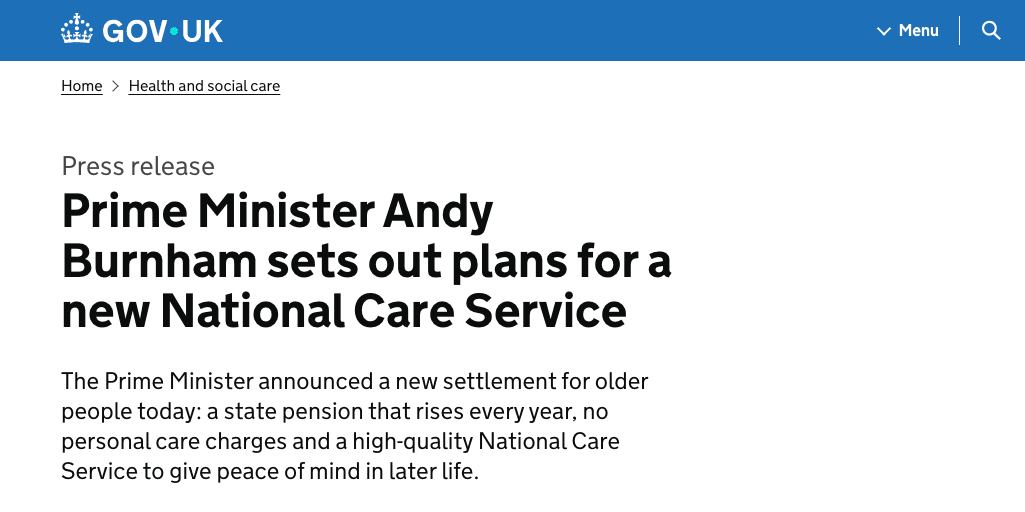
The state pension triple lock 2026 announcement has caused more panic than almost any pension story in recent memory. When Prime Minister Andy Burnham stood up on 1 October and said he was reforming the triple lock from 2030, millions of pensioners and future retirees immediately feared the worst. Search traffic for "state pension" spiked to over 50,000 searches in a single morning on 8 October, a rise of more than 1,000% driven by headlines that misread the announcement as the pension guarantee being scrapped entirely.
It wasn't. And this article explains exactly what is changing, what is staying, and what you should do right now.
What Is the State Pension Triple Lock 2026?
The triple lock is a rule that says the state pension must rise each April by whichever of these three figures is highest: the rate of CPI inflation measured in September, average earnings growth over the year, or a guaranteed minimum of 2.5%. This has been the law since 2010, and it has genuinely improved the living standards of UK pensioners over 15 years.
The state pension triple lock 2026 remains in force right now. Nothing has changed yet. The rises confirmed for April 2027, April 2028, and April 2029 all happen under the existing formula. The reform Andy Burnham announced does not take effect until 2030 at the earliest, and it still has to pass as legislation through Parliament.
The 2.5% minimum is not going anywhere. The part being changed is how the earnings element is calculated, not whether the pension rises each year.
Check Our Guide on how to claim Pension Credit
What Did Andy Burnham Actually Announce on 1 October 2026?
Burnham said the government intends to replace the direct annual earnings link with a looser, multi-year earnings average. The 2.5% floor and the inflation link are kept. The change is to the earnings element only.
Martin Lewis at MoneySavingExpert called this new formula a "2.5 times lock." He published a full explainer on 6 October and filmed a special video because the public confusion was so serious. His phrase is useful: there are still three reference points (inflation, earnings over multiple years, and 2.5%), but the earnings measurement is smoothed across years rather than tied to a single year's data.
The "single year" problem matters. In April 2024, the pension rose 8.5% because earnings in one calendar year were abnormally high during COVID recovery. A smoothed multi-year average would reduce those large one-off spikes, but it would also reduce the risk of very small rises when earnings fall sharply in a single year.
Burnham described the change as necessary to fund a National Care Service and to make the state pension system more financially sustainable long-term. The government expects to bring a bill forward within this Parliament.
The "2.5 Times Lock" Explained in Plain Numbers
The research note from MoneySavingExpert's October 2026 analysis illustrates how the new formula is expected to work over a three-year cycle.
Under the current triple lock, if inflation is 3%, earnings are 4%, and the 2.5% floor is not triggered, the pension rises by 4% in Year 1. Under the reformed system, the earnings element is smoothed across multiple years. So Year 1 might rise with inflation (3%), Year 2 catches up with accumulated earnings growth, and Year 3 rises with inflation again.
Over three years, the total rise under the old system might be 12.5%. Under the new system, the total might be 11.4%. It is a real reduction in some years, but it is not a pension freeze or a pension cut. The pension still rises every single April.
The biggest change pensioners would actually notice is in years like 2023 and 2024, when single-year earnings figures triggered unusually large rises. Those very large rises become less likely under the smoothed model. But in low-earnings years, the 2.5% floor still protects pensioners from getting nothing.
How Much Is the State Pension in 2026, and Will It Rise?
The current full new state pension for 2026/27 is £241.30 per week, which works out to £12,548 per year. If you reached state pension age before April 2016, the full basic state pension is £184.90 per week.
The state pension triple lock 2026 formula has produced these rises since 2021:
April 2021: 2.5% (floor applied). April 2022: 3.1% (inflation). April 2023: 10.1% (inflation, the highest on record). April 2024: 8.5% (earnings). April 2025: 4.1% (earnings). April 2026: 4.6% (earnings). April 2027 forecast: 3.9% under the current formula.
That April 2027 rise will happen under the existing triple lock. The reform does not apply.
What the April 2027 Rise Means for the Tax-Free Allowance
This is one of the most practically important points and one that is easy to miss in all the noise about the reform itself.
The full new state pension is currently £12,548 per year. The personal tax-free allowance, which has been frozen by the Treasury, sits at £12,570. That gap is just £22.
A 3.9% rise in April 2027 would push the full new state pension above £12,570 for the first time. For pensioners whose only income is the state pension, the government has pledged they will not pay income tax on it. But if you have any other income, such as a private or workplace pension, rental income, or part-time earnings, part of your state pension may start to be taxed from April 2027.
This is not a new tax on the state pension itself. It is a consequence of the personal allowance being frozen while the pension rises. It is worth checking your tax position with HMRC before next April if you have any income alongside your state pension.
Check Our Guide on how the Ofgem energy price cap affects your household budget
What Should You Do Right Now?
The panic around the state pension triple lock 2026 reform is bigger than the actual change. But there are still some genuinely useful steps you can take today.
Check your National Insurance record on gov.uk. You need 35 qualifying years to get the full new state pension. You need at least 10 to get anything. Gaps in your record can sometimes be filled voluntarily before a deadline, so checking now could be worth hundreds of pounds in future pension income.
Check whether you are eligible for Pension Credit. Around 880,000 people who qualify are not claiming it. Pension Credit tops up your weekly income if you are over state pension age and on a low income, and it also unlocks the Winter Fuel Payment and the Warm Home Discount. You can check and apply at gov.uk.
Note your state pension age. It is currently 66 for both men and women. The government has confirmed a rise to 67 between 2026 and 2028. If you are approaching your mid-60s, it is worth confirming your exact state pension date on gov.uk.
Do not make any drastic decisions based on the October 1 announcement. The reform is real but it is four years away, it has not passed into law yet, and the 2.5% minimum is not being removed.
Check Our Guide on maximise your household benefits
The state pension triple lock 2026 is not ending. The pension will still rise every April. What is changing, from 2030 at the earliest, is how the earnings element of the calculation is measured. The 2.5% floor remains. The inflation link remains. If you are currently receiving the state pension or you are within a few years of state pension age, your next two or three rises are entirely unaffected. Check your NI record, check Pension Credit, and check your tax position ahead of April 2027. That is genuinely the most useful thing you can do right now.
This article is for informational purposes only and does not constitute financial advice. State pension rates and policy details are based on confirmed 2026/27 figures and announced policy intentions as of October 2026. Always check current rates on gov.uk and seek independent financial guidance before making money decisions.
- state pension triple lock 2026
- triple lock changes explained UK
- state pension increase 2026
- state pension 2.5 times lock
- how much is state pension 2026
- state pension April 2027 rise
- Andy Burnham pension announcement
This article is for general information only and is not financial, tax or legal advice. Rules and rates vary by country and change over time.