Cash ISA UK 2026: Rules, Rates and the £12,000 Change
Cash ISA allowance in 2026/27 is £20,000 but drops to £12,000 from April 2027. Learn how cash ISAs work, best rates now, and what to do before the deadline.

By Hammad Younas
Published · Last updated · 8 min read
Fact-checked by Hammad Younas
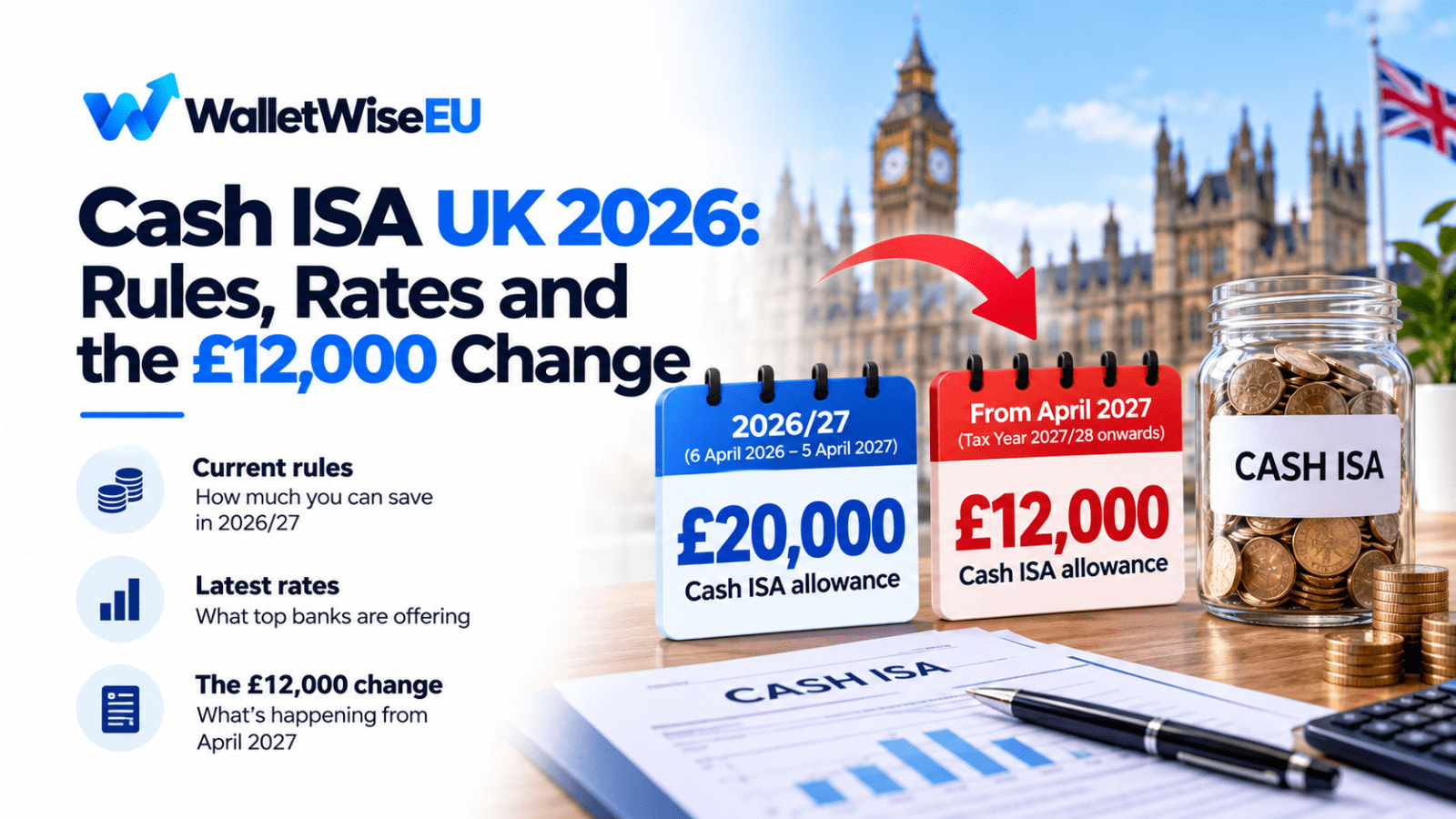
Your savings plan this tax year could look very different depending on what you know about cash ISA UK 2026. The 2026/27 tax year is confirmed as the last full year where under-65s can put the entire £20,000 into a cash ISA before the government trims the limit to £12,000 in April 2027. Read on for a plain-English breakdown of how cash ISAs work, where rates stand right now in October 2026, and what steps are worth taking before the deadline closes.
How Does a Cash ISA Work? (Plain English Explanation)
Many people ask how does a cash ISA work, and the answer is simpler than it sounds. It is a savings account where the interest you earn carries no UK income tax. Money goes in, the bank pays interest on it, and HMRC does not take a share.
Every UK adult who lives in the country gets an annual ISA allowance, which sits at £20,000 for the 2026/27 tax year. That allowance covers every type of ISA combined. Whether you put the money into a cash ISA, a stocks and shares ISA, a Lifetime ISA, or an Innovative Finance ISA, the combined total across all of them cannot go above £20,000 in any single tax year.
A couple of points worth knowing from the start:
Unused allowance disappears at the end of each tax year. If you put in £10,000 during 2026/27 and do not use the rest before 5 April 2027, that unused £10,000 is lost and cannot be rolled into the following year.
Since April 2024, the rules allow you to hold cash ISAs with more than one provider in the same tax year, which makes switching to a better rate far easier than it used to be.
Feature | Detail |
|---|---|
Annual allowance (2026/27) | £20,000 across all ISA types |
Tax on interest | Zero |
Access | Depends on type (easy access or fixed) |
Cash ISA Allowance 2026: What You Can Save This Tax Year
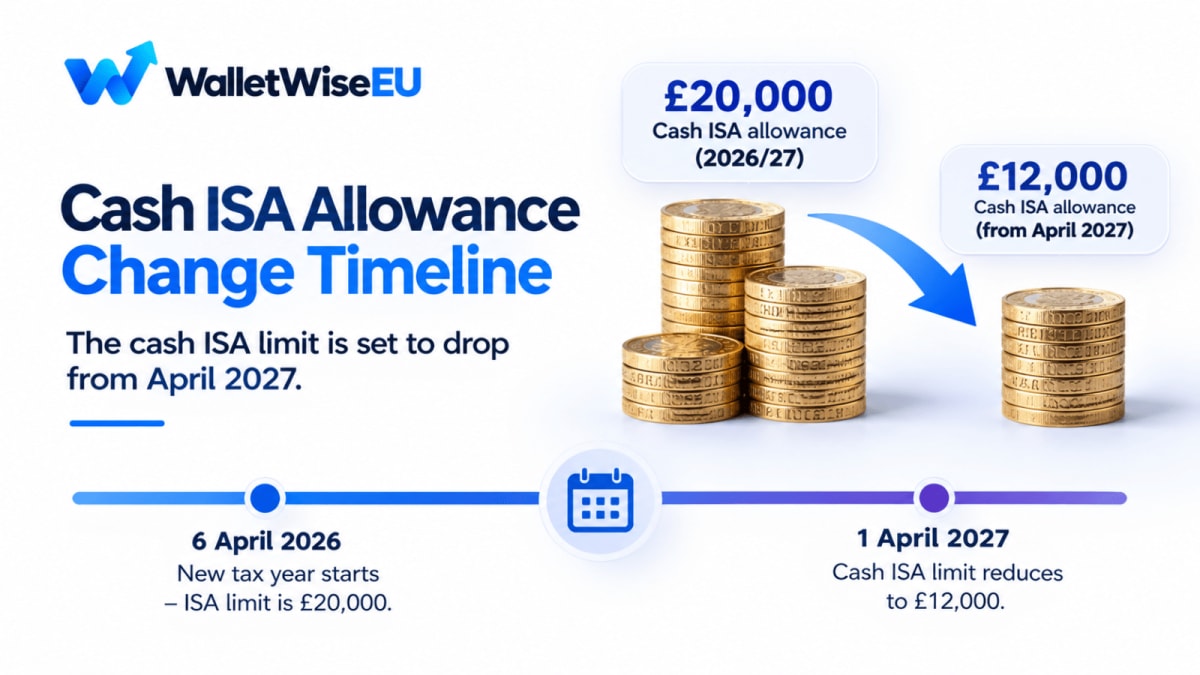
Your cash ISA allowance in 2026 covers the current 2026/27 tax year, which runs from 6 April 2026 through to 5 April 2027. The total ISA allowance for this period is £20,000, and if you choose to put all of it into cash, you can.
That matters because this is the last complete tax year where under-65s can do exactly that. From 6 April 2027, that option changes significantly.
Here is how the allowance breaks down across ISA types:
ISA Type | 2026/27 Limit | Notes |
|---|---|---|
Cash ISA | Up to £20,000 | Last full year at this level for under-65s |
Stocks and Shares ISA | Up to £20,000 | Shared from the same £20,000 pot |
Lifetime ISA | Up to £4,000 | Counts toward the £20,000 total |
Innovative Finance ISA | Up to £20,000 | Shared from the same £20,000 pot |
Every ISA type draws from the same £20,000 annual pot. Putting £20,000 into a cash ISA while also putting £20,000 into a stocks and shares ISA in the same tax year is not permitted. Your combined total across all ISAs must stay at or below £20,000.
The full cash ISA allowance in 2026 of £20,000 is only available if you put nothing else into other ISA types that tax year.
The £12,000 ISA Limit Change in April 2027: What It Means for You
The ISA limit change in 2027 UK was announced at the November 2025 Budget. From 6 April 2027, under-65s are restricted to a maximum of £12,000 per year into cash ISAs, down from the current £20,000. For most savers in the UK, this is a material reduction.
Here is a summary of the confirmed changes as of October 2026:
Under-65s: cash ISA limit falls from £20,000 to £12,000 from 6 April 2027
Over-65s: the £20,000 limit remains (the age exemption has been confirmed)
Transfer ban: from April 2027, moving money from a stocks and shares ISA into a cash ISA will no longer be allowed
Cash held in a stocks and shares ISA: subject to a 22% charge from April 2027
In practical terms, if you are under 65, the 2026/27 tax year is the last window to shelter the full £20,000 in a tax-free cash account. Anyone who has not used their full allowance yet has until 5 April 2027 to act.
The over-65 exemption creates a real age-based split. Someone who turns 65 before 6 April 2027 retains the £20,000 limit in future years, while a 64-year-old faces the £12,000 cap from April 2027 onwards. If you are close to that boundary, it is worth being clear on which side of it you fall before the deadline passes.
Best Cash ISA Rates UK Right Now (October 2026)
The best cash ISA rates in the UK in October 2026 are running above 4.8% for one-year fixed products, with easy access accounts paying around 4.5%. At those levels, the tax-free benefit makes a real difference for anyone holding a substantial savings balance.
Here is where rates stand in October 2026:
Account Type | Rate Range (Oct 2026) | Notes |
|---|---|---|
Easy access cash ISA | 4.50% to 4.87% | Withdraw at any time |
1-year fixed cash ISA | 4.80% to 5.17% | NS&I confirmed 5.17% from Oct 6 |
2-year fixed cash ISA | 4.70% to 4.90% | Locks in beyond April 2027 |
NS&I confirmed a 5.17% rate on its one-year fixed cash ISA from 6 October 2026, one of the strongest rates available from a mainstream provider. Easy access accounts at several banks and building societies are sitting between 4.5% and 4.87%.
One thing to think through before committing to a fixed rate: a one-year deal opened in October 2026 matures around October 2027, which is after the April 2027 rule change. When it matures, under-65s can only add £12,000 per year going forward. That is not a reason to avoid fixing, but it changes what you can do with the account once the fixed term ends.
MoneySuperMarket and MoneySavingExpert both maintain best-buy rate tables that are updated regularly and are worth checking before opening any account.
Cash ISA vs Savings Account: Which Is Better in 2026?
The answer turns on how much you have saved and which income tax band you sit in. The cash ISA rules UK around the personal savings allowance are what make this decision matter.
UK taxpayers can earn some interest tax-free through their personal savings allowance (PSA), but the amount depends on their tax band:
Basic rate taxpayers (20%): £1,000 of interest per year tax-free
Higher rate taxpayers (40%): £500 of interest per year tax-free
Additional rate taxpayers (45%): no PSA whatsoever
At a savings rate of 4.5%, a basic rate taxpayer with £22,222 in a standard savings account earns exactly £1,000 in interest, which matches their PSA exactly. One extra pound of savings generates taxable interest. For anyone holding more than roughly £22,000 at these rates, a cash ISA shelters interest that would otherwise be taxed.
For higher rate taxpayers, the threshold is lower still. At 4.5%, around £11,111 in a standard account uses up the full £500 PSA. Anything above that level benefits directly from the ISA wrapper.
Additional rate taxpayers have no PSA at all, so every pound of interest earned in a standard savings account is taxable. A cash ISA is almost always the right tool for savers in that band.
If your savings are modest and you are a basic rate taxpayer with well below £20,000 set aside, a standard easy access savings account will often serve you fine. But once your savings start generating interest that pushes up against your allowance, a cash ISA becomes the better option.
Your Cash ISA Checklist for 2026/27 (Before April 2027)
Making good use of your cash ISA allowance in 2026 before the April 2027 deadline comes down to a handful of practical steps. Here is what to do:
Find out how much of your 2026/27 ISA allowance you have used so far. Log into your ISA provider or check your HMRC Personal Tax Account at gov.uk. You need to know your remaining balance before deciding what to do with it.
If you want to put the full £20,000 into cash in this final year before the limit drops, open or top up your account now. You have until 5 April 2027, but leaving it to the last moment increases the risk of missing the deadline entirely.
Before locking into a fixed rate, think through the maturity date. A one-year fixed cash ISA opened now matures around October 2027, after the new rules take effect. When it matures, under-65s can only contribute £12,000 per year going forward. A two-year deal stretches further past the rule change, which may suit some savers better depending on where rates move.
If you are 65 or over, the April 2027 limit change does not apply to you. Your cash ISA limit stays at £20,000 per year. Even so, it is worth reviewing your rates to make sure your money is working as hard as it can.
Check your personal savings allowance against your current savings balance. If the interest you earn is likely to exceed your PSA at current rates, a cash ISA is preventing a tax bill that would otherwise arrive quietly on your self-assessment return.
If you are considering moving money from a stocks and shares ISA into a cash ISA, do it before 5 April 2027. The transfer ban announced in the November 2025 Budget makes this route unavailable after that date.
The cash ISA UK 2026 picture is clear: this tax year carries more weight than most. The most useful thing any saver can do today is check how much of their £20,000 allowance they have not yet used and decide whether moving it into a competitive rate tax-free account makes sense before the April 2027 window closes.
How to protect your savings from the autumn budget 2026 changes
How the car finance mis-selling claim could put money back in your pocket
This article is for informational purposes only and does not constitute financial advice. Information is based on publicly available data and government announcements as of October 2026. Always check gov.uk and HMRC for the latest confirmed guidance, and consider speaking to a qualified financial adviser before making decisions based on your personal circumstance
This article is for general information only and is not financial, tax or legal advice. Rules and rates vary by country and change over time.